Wildland Sizeup Report Tag
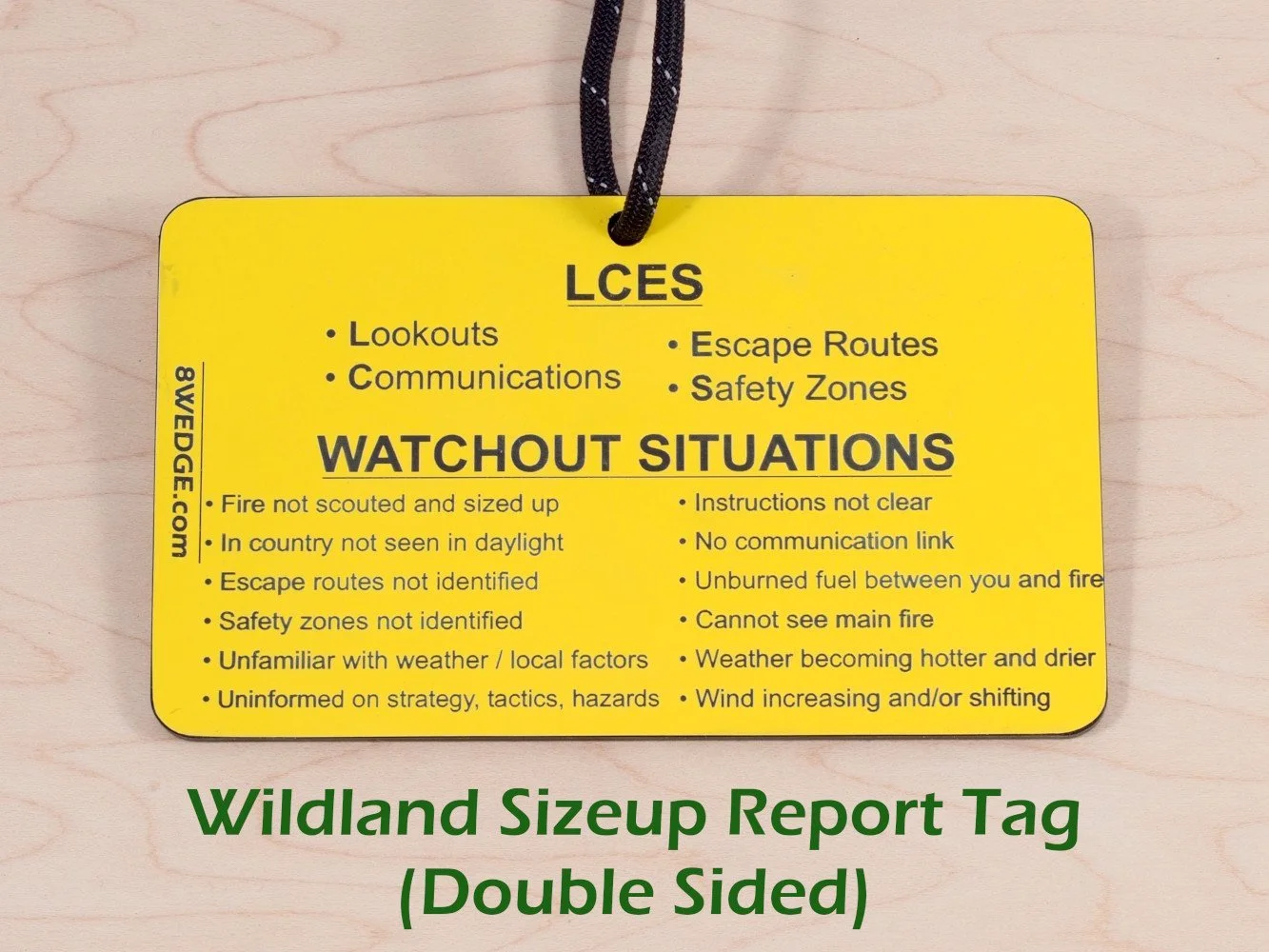
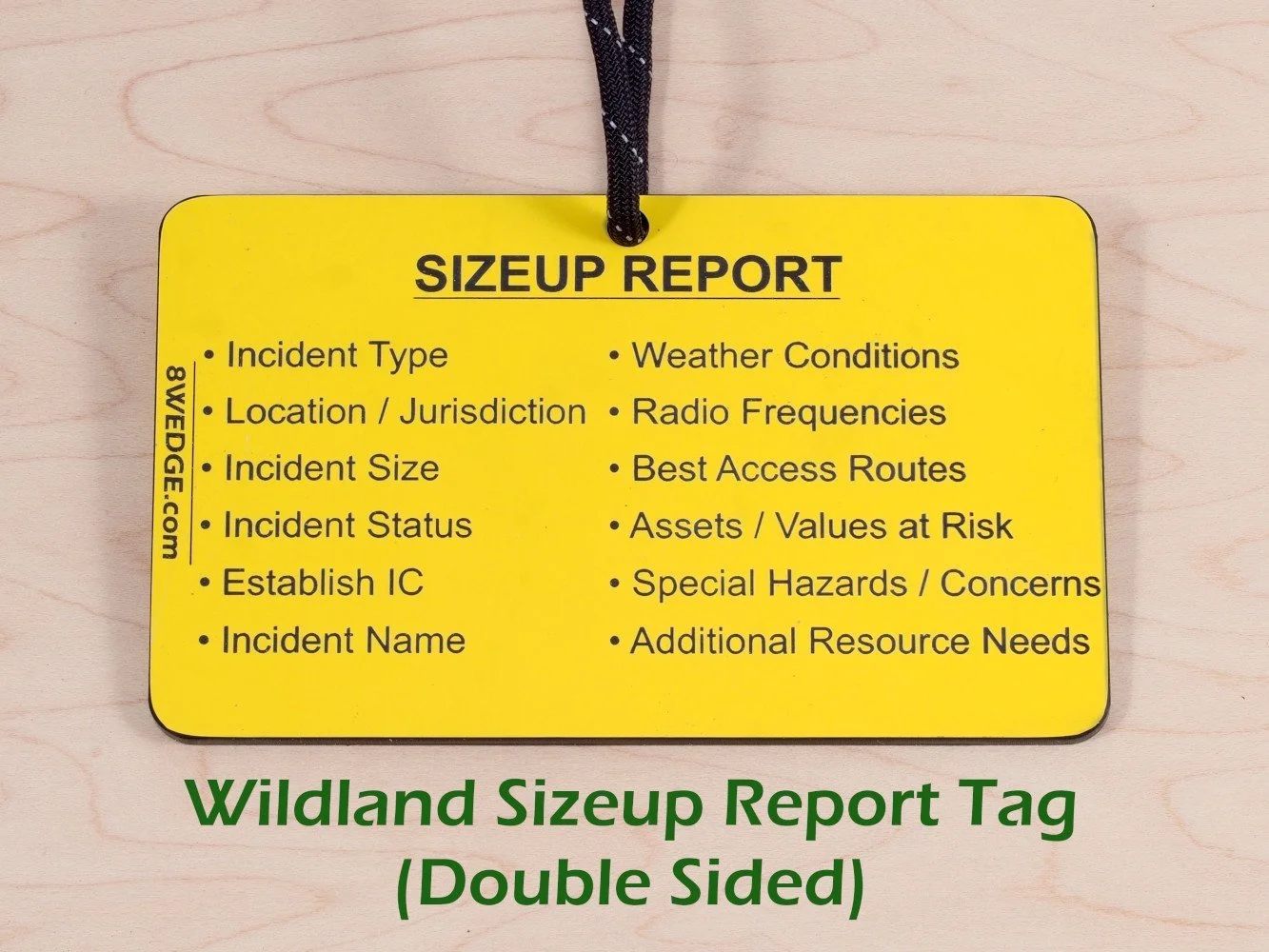
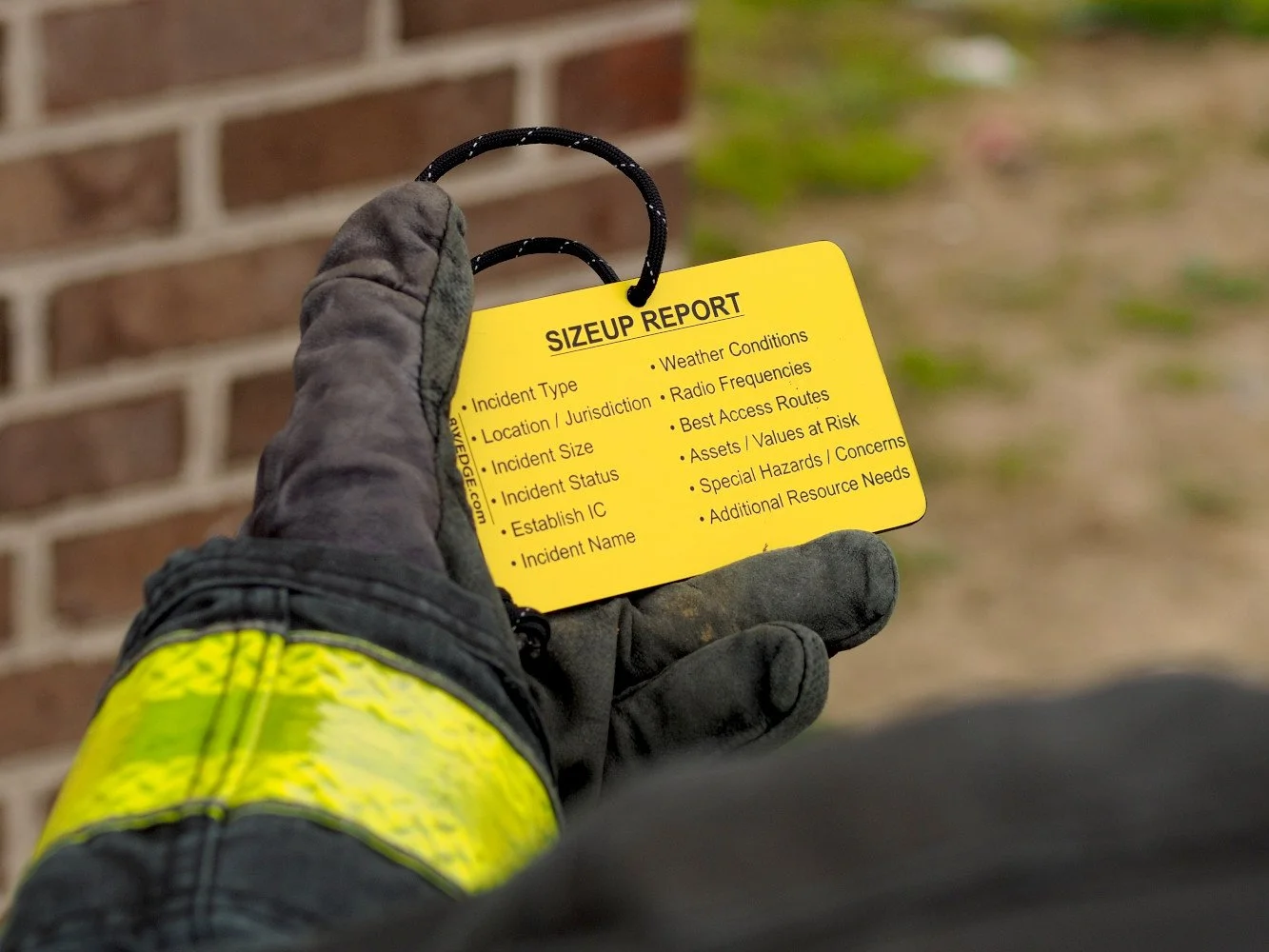


Wildland Sizeup Report Tag
The Wildland Sizeup Report Tag is a durable, field-ready reference designed to support clear, consistent size-up and initial reporting on wildland incidents.
Based directly on NWCG/IRPG guidance, this tag organizes key size-up information into a structured format that helps you quickly assess conditions, communicate effectively, and maintain situational awareness under pressure.
The double-sided version includes both the Sizeup Report and a LCES + Watchout Situations safety check, reinforcing critical hazard recognition in dynamic fire conditions. The mounted version provides the same information in a larger, single-sided format for rigs, command boards, or staging areas.
Whether used on the fireline, during training, or as part of pre-incident preparation, this tag serves as a practical tool to help ensure nothing critical is missed when it matters most.
Built for Real Fireline Use
Wildland incidents are fast-moving and unforgiving. This tag provides a simple, durable reference that supports:
Structured size-up and initial reporting
Clear communication across crews and divisions
Rapid hazard recognition and safety checks
Consistency with NWCG / IRPG training
What’s Included
Double-Sided Tag (5" x 3")
Side 1: Sizeup Report (IRPG-aligned)
Side 2: LCES + Watchout Situations
Your choice of paracord lanyard to attach
Mounted Tag (7.5" x 3")
Single-sided layout with the same information
4x self-tapping mounting screws
Designed for mounting to rigs, clipboards, or command boards
Designed to Reinforce Training
This tag is not a replacement for training—it reinforces it.
By aligning directly with IRPG size-up structure and Watchout Situations, it helps firefighters apply what they already know in real-world conditions where stress, fatigue, and time pressure can impact decision-making.
Simple. Durable. Field-Ready.
Engraved for long-term readability
High-contrast laminate options for visibility
Lightweight and easy to carry or mount
Built for repeated use in demanding environments
When to Use It
Initial arrival and size-up
Ongoing incident assessment
Crew briefings and communication
Training and review scenarios
System-Based Use
These tags are not standalone—they’re part of a complete wildland reference set.
Each tag is designed to provide quick access to critical information on the fireline, helping reinforce situational awareness, communication, and decision-making during operations.
To complete your wildland reference setup, pair this tag with:
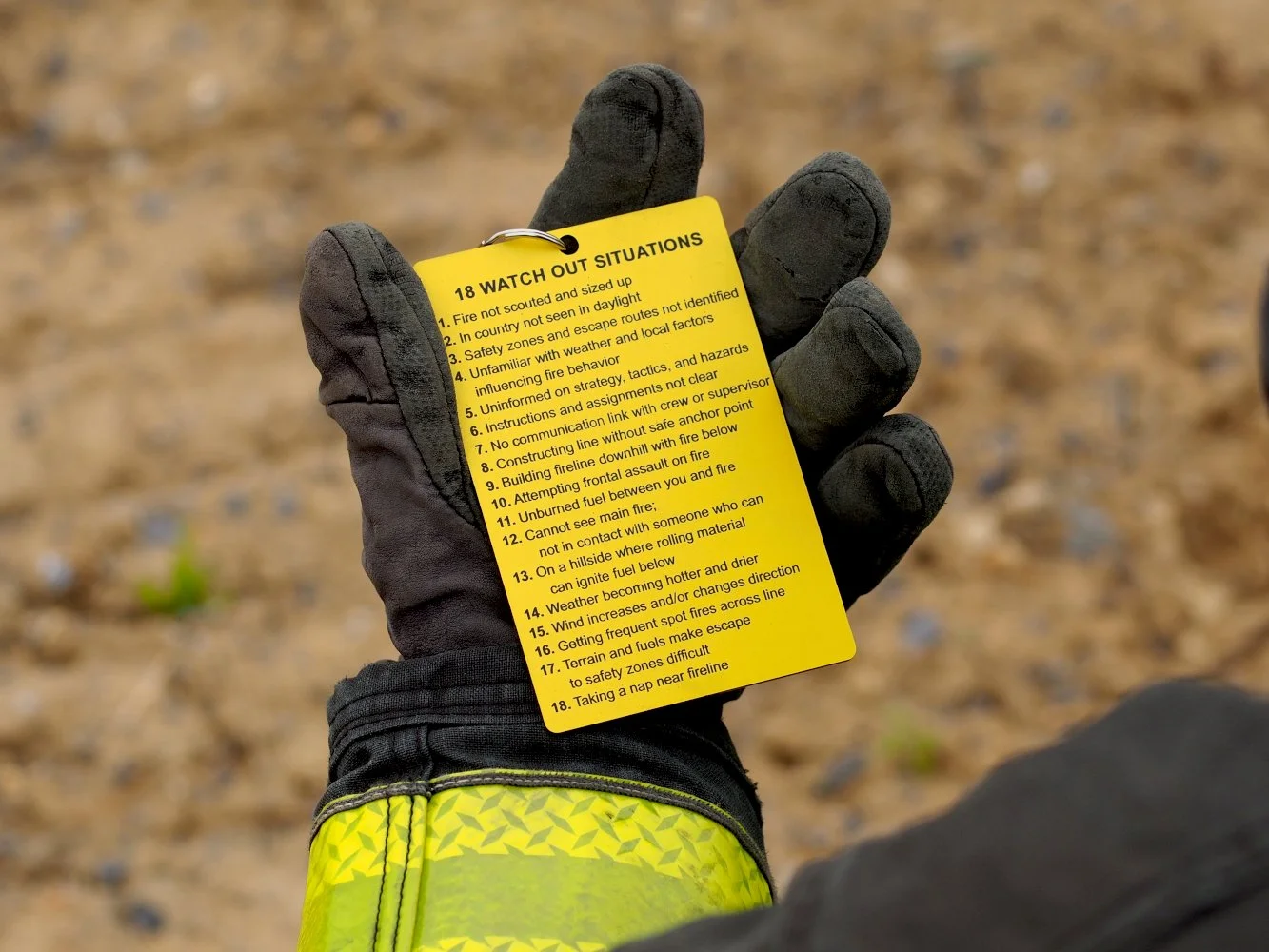
• 10 & 18 Tag – Standard Fire Orders and Watch Out Situations
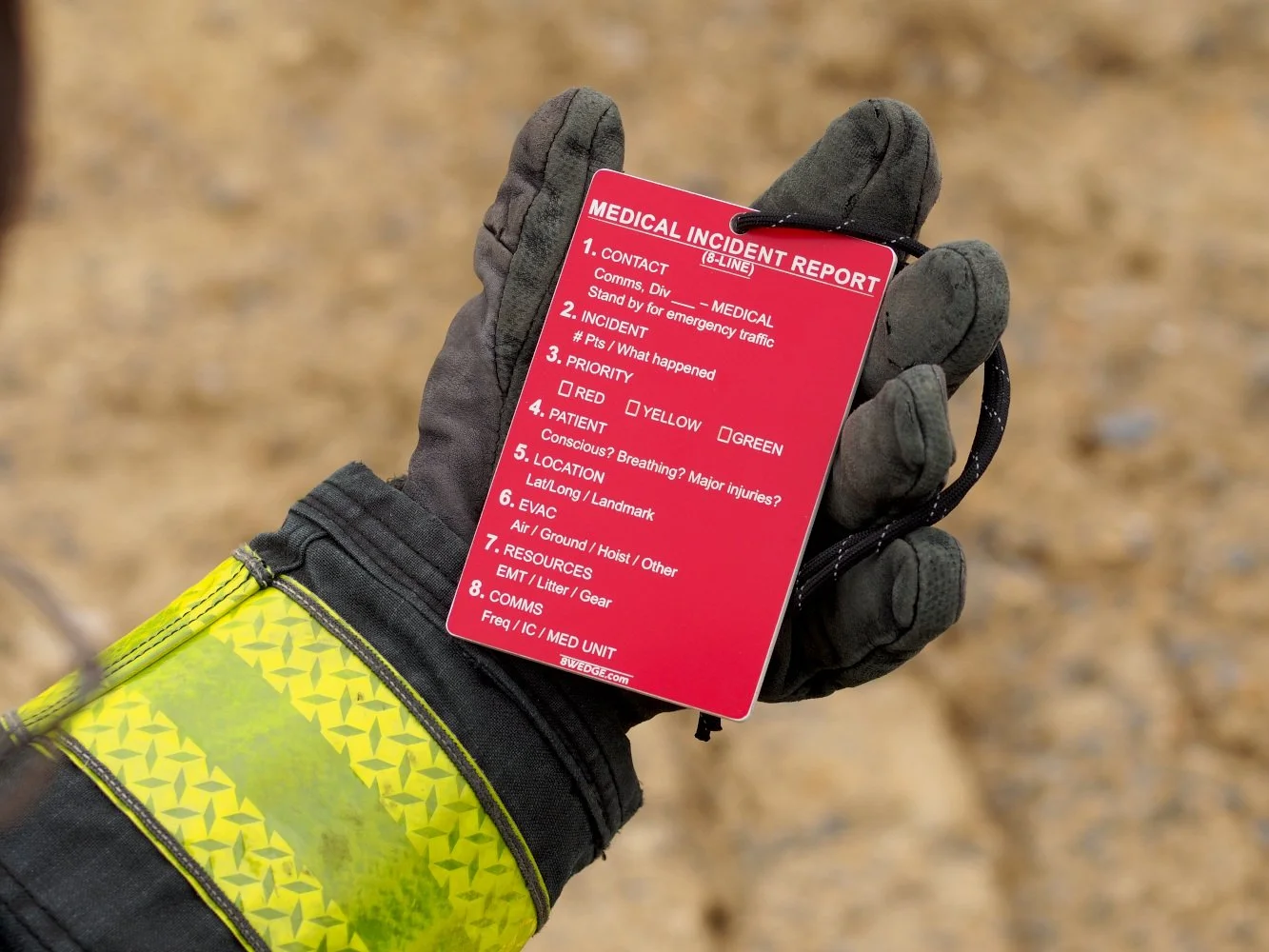
• Wildland Medical Tag – Medical response and patient tracking reference